Home·Services·Lead Roofs & Domes
Lead Roofs & Domes · Brighton & the South East

Lead roofs and domes

Full lead coverings, curved roofs, ogee cheeks and domes, set out and formed by hand. Sheet ordered in the right code for the bay, bossed and lead-welded on site, and laid to falls that still work in fifty years time.

Free quotes · Supply and fit or labour only · Fully insured

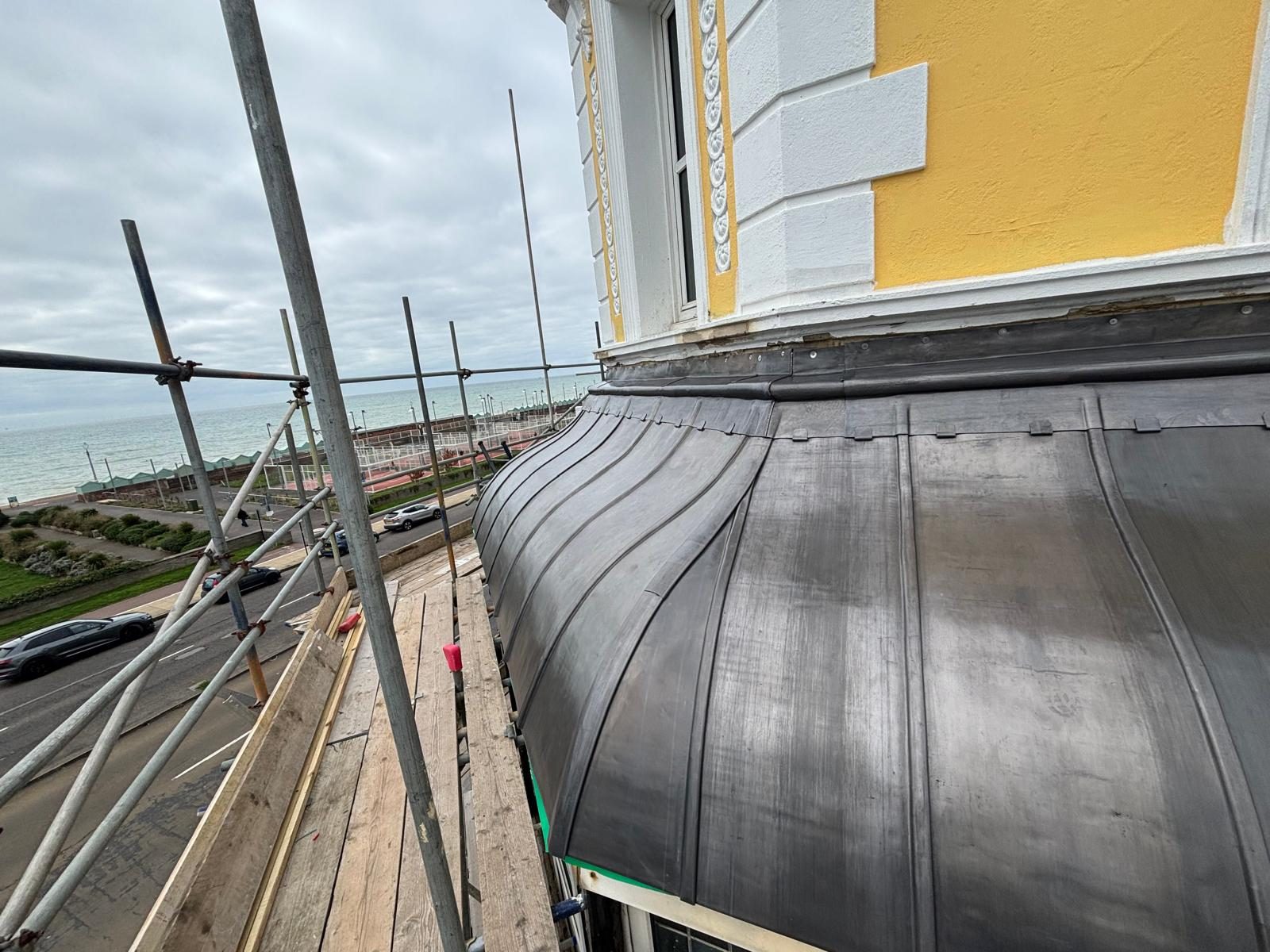
Curved lead roof with wood-roll courses above the seafront, Paul Marchant Lead Roofing
Curved lead roof with wood-roll courses above the seafront
What is included

Every lead roof, covered

Set out before a sheet is cut

Bay sizes, roll centres and drip positions are worked out for the roof in front of us. Lead moves with the weather, and bays that are too big are the single most common reason a roof fails early.

Right code for the job

Code 5, 6, 7 and 8 all have their place. The code is chosen for the exposure, the bay size and the detail rather than for what is cheapest on the delivery note.

Wood roll and welted seams

Traditional wood roll, hollow roll and welted detailing formed on the roof, so the lines running up the slope are the ones the building was designed to have.

Curves and domes by hand

Ogee cheeks, barrel curves, cupolas and full domes bossed and dressed over the timber, with the ribs and seams set out to look right from the ground.

Substrate checked first

The deck, firrings and ventilation get looked at before any lead goes down. Lead laid on a damp or unventilated deck corrodes from underneath, and nobody sees it until it drips.

Patination oil on completion

Every finished surface is patinated so the roof weathers evenly instead of streaking white run-off down the stonework in the first winter.

Questions

Asked and answered

How long does a lead roof last?

Properly detailed leadwork on a well ventilated deck routinely lasts eighty to a hundred years, and there is plenty of Georgian and Victorian lead still on Brighton and Hove roofs today. What kills a lead roof early is almost always the same short list: bays that are too big, the wrong code, or no ventilation under the deck.

Can you form a curved or domed roof?

Yes, and it is the work Paul is known for. Domes, ogee cheeks, barrel curves and cupolas are bossed and lead-welded by hand on the roof rather than bought in as a pressed shape, which is the only way the curve genuinely matches the timber underneath.

What is the difference between milled and cast lead?

Milled lead is rolled to a consistent thickness and coded by weight, and it is what almost all modern work uses. Cast lead is sand cast, thicker in places and slightly uneven, and it is normally specified on listed or heritage buildings where the finish has to match what was there. We work with both and will tell you which one the building needs.

Do you replace lead roofs that have been covered in felt or paint?

Regularly. Painted-on coatings and felt patches are what gets put on when a roof needed a lead roofer and did not get one. They buy a couple of years. We strip them back, look at what is actually wrong, and price the proper repair or recovering.

Will the new lead match the old lead next to it?

Not on day one, no. New lead is bright and takes a couple of years to weather down to the grey of the sheet beside it. Patination oil evens out how it goes, and once it has been through a winter or two the difference stops being obvious.
Coverage

Lead Roofs & Domes across the South East

Planning a lead roof?

Send a photo on WhatsApp or call Paul for a free quote.

Call Paul
Contact

Get a free quote

Call Paul

 
Quickest way to talk a job through.

WhatsApp a photo

Send a photo of the roof
Snap it, send it over, get a straight answer on what it needs.

Email Paul

 
Best for drawings, specs and schedules.

Based in Brighton

Covering Sussex and the wider South East, happy to travel for the right work.

Fast response

Calls and WhatsApp messages answered same day wherever possible.

Request a quote